
AI to Accelerate Insight & Improve Outcomes
Discover how AI can accelerate insight and enhance recommendations for better environmental outcomes, all while ensuring human control remains paramount. Learn more about the transformative potential of AI in sustainability.
Alex Rankin
11/10/20253 min read
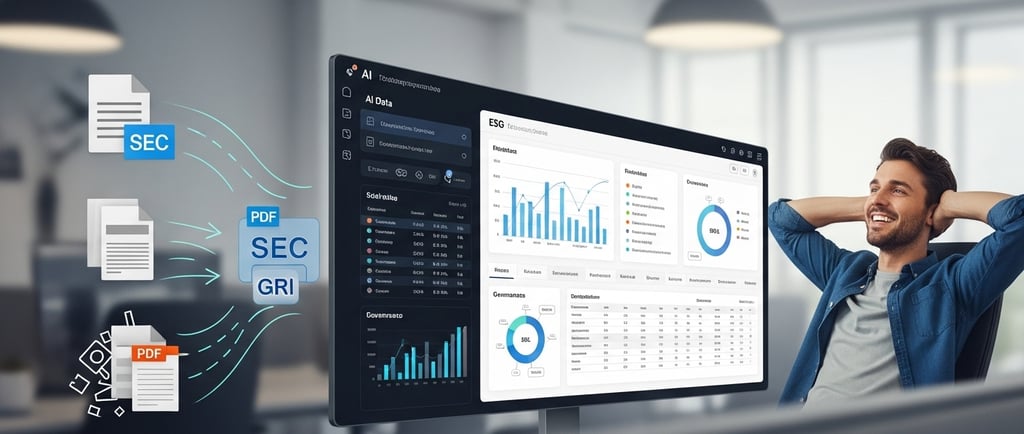
Environmental consultancies are being asked to deliver stronger evidence, deeper insight, and more measurable impact than ever before. Yet most teams are stretched thin — juggling complex legislation, large datasets, demanding timelines, and expectations that keep climbing.
Against this backdrop, environmental professionals are right to question how AI fits into their world. After all, environmental work is nuanced, contextual, and judgment-driven. So the idea that AI could “replace” experts feels both unrealistic and risky.
But that's not where the true power of AI lies.
The real opportunity — the one most consultancies are overlooking — is how practical, mission-aligned AI can help environmental experts explore more options, uncover risks earlier, and deliver stronger environmental outcomes without increasing workload or sacrificing defensibility.
AI isn’t here to think for us. It’s here to help us think better, faster, and with more clarity.
From Information to Insight: Why AI Matters Now
Environmental projects generate enormous volumes of information: specialist reports, regulatory updates, policy documents, field notes, modelling outputs, GIS layers, stakeholder inputs, historical approvals, and more.
The challenge isn’t collecting the information — it’s making sense of it in time to drive sound decisions.
This is where AI becomes a genuine asset.
It can summarise complex legislation in seconds.
It can compare requirements across jurisdictions.
It can extract key risks from technical documents.
It can map policy pathways to specific project elements.
It can help structure early drafts of EIAs, audits, and assessments.
It can surface gaps that would otherwise be missed until later stages.
None of this replaces expertise. It accelerates it — allowing your team to spend more time on analysis, interpretation, and environmental reasoning.
Exploring More Mitigation and Design Options — Not Fewer
One of the biggest limitations in current assessment processes is time. Teams simply don’t have the capacity to explore as many low-impact alternatives as they’d like.
AI helps by rapidly generating structured option sets, such as:
lowest-impact layout options
alternative mitigation pathways
staged construction scenarios
offset package concepts
energy efficiency improvement pathways
balanced design options that trade cost, feasibility, and environmental benefit.
Your experts maintain full control — reviewing, refining, rejecting, and enhancing these options based on professional judgement.
But instead of starting from scratch, they start with a curated set of possibilities that would have taken far longer to develop manually.
More options considered → better recommendations delivered → stronger environmental outcomes.
Stronger Outcomes Start With Better Inputs
Environmental impact depends on the quality of information used to guide decisions. AI supports that improvement by helping your team:
identify inconsistencies early
spot missing information
highlight policy conflicts
model comparative impacts
translate raw data into clear insights
present findings in defensible, consistent formats
This doesn’t automate environmental expertise — it amplifies it.
Experts remain central. AI simply helps them get to the high-value thinking faster.
The Future of Environmental Work is Human + AI — Not Human vs. AI
When implemented well, AI:
frees environmental experts from low-value tasks
supports deeper analysis with less effort
improves clarity and consistency across outputs
enables stronger, earlier mitigation thinking
helps teams respond to regulatory shifts with more confidence
strengthens the quality and defensibility of environmental decisions.
Environmental outcomes improve not because AI takes over — but because experts have more time and insight to do what they do best.
This is the future of environmental consulting: human expertise at the centre, empowered by practical, mission-aligned AI.
Of course, AI isn’t a silver bullet, and it isn’t without its challenges. It brings genuine risks — from accuracy limitations to data security and the need for careful human oversight. These concerns are real, and they shouldn’t be ignored. But with the right guardrails, clear workflows, and transparent processes in place, they can be managed responsibly.
What’s clear is that AI isn’t a passing trend. It represents the biggest shift in how we work since the rise of the internet. Environmental consultancies that learn to use it thoughtfully and safely will move faster, deliver clearer insights, and create stronger environmental outcomes. Those that stand still risk falling behind as the industry evolves around them.
If you're ready to explore what this could look like for your business, we’re here for the conversation.